Facebook is learning that hardware is hard - The Verge
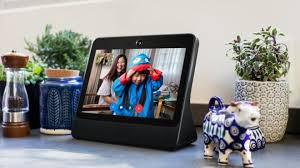
One of the main aphorisms I heard as a tech columnist is a three-word hold back expressed by any individual who’s at any point looked to make something with particles instead of bits: Hardware is hard. Commit an error in programming and you can push out a fix pretty much promptly; commit an error with equipment and the telephones detonate. In the past times, a tech organization normally made programming or equipment, however nowadays that or has been supplanted with an and. After Apple’s outsized accomplishment with the iPhone, the various tech mammoths got religion on the estimation of programming and equipment cooperating. Furthermore, all of a sudden organizations like Microsoft, Google, and Facebook, who once constrained themselves to high-edge programming organizations, needed to put untold billions in making sense of to make and sell physical articles.
Facebook first dunked a toe in these waters when it purchased Oculus, creator of augmented reality equipment, in 2014. From that point forward, as Salvador Rodriguez relates in CNBC today, the organization has battled to pick up footing in equipment markets. It spun up an innovative work lab called Building 8 out of 2016, making science fiction guarantees about advances that would give us a chance to hear with our skin and type with our psyches. Be that as it may, Building 8 was redesigned into nonexistence only two years after the fact — with its solitary enduring commitment to Facebook’s item lineup being the video-talk gadget Portal.
Entry propelled a year ago to a tech press suspicious that purchasers would greet into their homes a camera and mouthpiece from an organization that has spent the previous couple of years battered by information protection embarrassments. The distrust seems to have been justified, Rodriguez reports:
It’s hazy how the new Portal items will charge, however the original discharged in 2018 transported just 54,000 units, as indicated by IDC. Facebook questions that gauge, yet the organization has never offered its very own figure and declined to do as such at the second-age Portal uncovering on Tuesday.
(Another gauge puts the figure at some place under 300,000 units, or under 1 percent of the market.)
Simultaneously, it can take a brand a very long time to manufacture piece of the overall industry. There was never an inquiry in my mind whether Facebook would construct a second era of Portal gadgets — just what they would resemble when they arrived, and how the world would respond when they did.
On Wednesday we discovered. The organization presented three new form of Portal: a 8-inch and a 10-inch form that resemble less useful iPads, and an embellishment considered Portal TV that attachments into your TV. As in the past, a noteworthy subject of inclusion was the security dangers related with the gadget. Also, investigators remain genuinely bearish on Portal in the close to term, Heather Kelly reports in the Washington Post:
Gateways will represent only 4 percent of keen presentation shipments in 2019, says David Watkins, an examiner at statistical surveying firm Strategy Analytics. He refers to high costs and security worries as reasons the shrewd presentations haven’t taken off additional.
The most prevalent brilliant presentation in North America is Google’s Nest Hub, with Amazon’s Echo Show in runner up, concurring Strategy Analytics. It evaluates the savvy show market will hit 31 million gadgets all around in 2019. (The gadgets are particularly well known in China, where organizations like Baidu and Xiaomi sell economical forms of their own.)
So why continue onward?
Andrew “Boz” Bosworth, the long-lasting Facebook official who presently runs the equipment division, says Portal is a quintessential Facebook item. “This item is the very center substance of what Facebook does,” he said Tuesday at an item showing I went to in San Francisco. “It associates you seriously with the individuals you care most about.”
The manner in which it interfaces individuals is to a great extent through video calls, which it spiffs up with enlarged reality includes, a camera that tracks individuals around the room, and different upgrades. To me everything feels like a ton of work to make video calls possibly better, yet Bosworth revealed to me that Portal is something else.
“Video approaching the telephone consistently felt very value-based,” he let me know. “Your left hand is yielded to the call until you’re finished. [You’d think] ‘how might I get off this call as obligingly as could be expected under the circumstances? While Portal is much increasingly like hanging out. You don’t need to do anything. That, I believe, is something that is intriguing.”
Of course, I said. However, why not simply purchase an iPad and use Skype or FaceTime?
“At this moment those are bad encounters,” Bosworth said. “Go set an iPad up and invest a huge amount of energy video-calling individuals you care about. Perceive how pleasant it, is or how irritating it is. And after that do it with Portal.
“This is the place I think individuals turn out badly,” he proceeded. “Individuals simply take a gander at the highlights on the container … That’s not there this lives. This lives in the experience.”
It stays to be perceived what number of more individuals will pursue that experience than did a year ago. Meanwhile, plainly the story over security and in-home showcases doesn’t start and end with Facebook. Around the same time updates on Portal turned out, the Washington Post investigated how your keen TV is checking what you watch to target promotions at you, and the Financial Times announced that your shrewd TV is sending statistical surveying information to Netflix and expressly distinguishing data to Google.(Source)